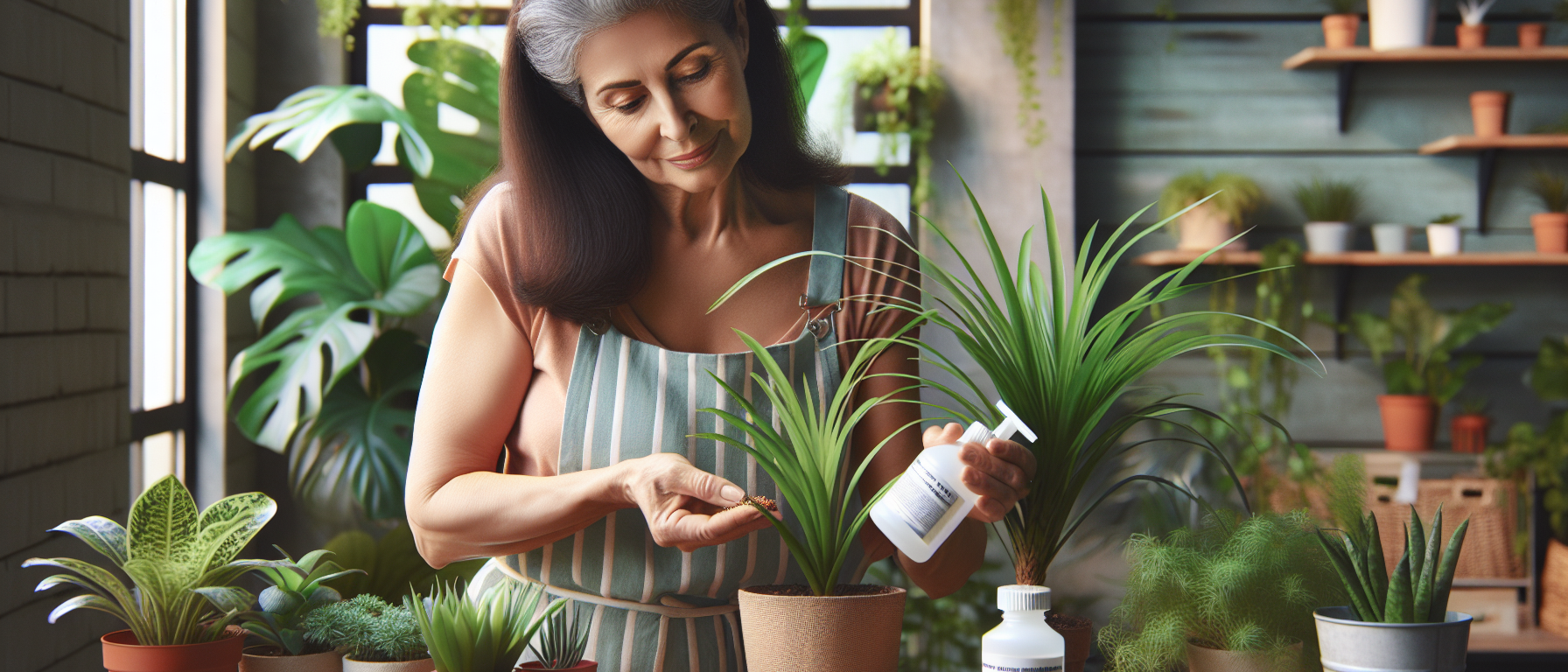
Feeding Palms and Tropical Plants :
Palms and tropical plants grown indoors require regular feeding to support their lush foliage and vibrant growth. Use a fertilizer specifically formulated for palms and tropical plants, with a balanced ratio of nutrients and micronutrients to mimic their natural habitat. Feed palms and tropical plants every four to six weeks during their active growing season, from spring to early fall, to encourage healthy leaf development and vibrant colors. Ensure that the soil is well-draining and that the plants receive adequate humidity to complement their feeding regimen.

Feeding Air Plants :
Air plants, also known as Tillandsias, have unique feeding requirements due to their epiphytic nature. Instead of soil, air plants absorb moisture and nutrients through their leaves from the air. Feed air plants by misting them with a specialized air plant fertilizer or by soaking them in a diluted fertilizer solution once a month. Ensure that the plants are thoroughly dried after feeding to prevent rot and fungal infections. Provide air plants with bright, indirect light and good air circulation to support their growth and nutrient uptake.
Feeding Aquatic Plants :
If you have aquatic plants growing in indoor ponds or aquariums, they will require specialized aquatic plant fertilizer to thrive. These fertilizers are formulated to provide essential nutrients to underwater plants without harming fish or other aquatic life. Follow the manufacturer’s instructions for dosing and application, and avoid overfeeding to prevent algae blooms and water quality issues. Monitor the growth and health of aquatic plants regularly and adjust the feeding regimen as needed to maintain optimal conditions for both plants and aquatic life.
Feeding Moss and Ferns :
Mosses and ferns are unique indoor plants that require regular feeding to support their delicate foliage and growth habits. Use a diluted liquid fertilizer or organic fertilizer to feed mosses and ferns, applying it sparingly to avoid overfertilizing. Feed mosses and ferns every two to four weeks during their active growing season, ensuring that the fertilizer is evenly distributed over the entire plant surface. Provide mosses and ferns with consistent moisture levels and indirect light to promote healthy growth and lush foliage.
Feeding Bonsai Trees :
Bonsai trees grown indoors require specialized care, including feeding, to maintain their miniature size and artistic form. Use a balanced liquid fertilizer or bonsai fertilizer specifically formulated for these unique plants. Feed bonsai trees every two to four weeks during their active growing season, from spring to early fall, ensuring that the soil is moist but not waterlogged. Monitor the health and growth of bonsai trees regularly and adjust the feeding regimen as needed to maintain their shape and vitality.
By understanding the specific feeding requirements of different types of indoor plants and providing them with the appropriate nutrients, you can ensure their health, vigor, and beauty for years to come.
 Home and Garden