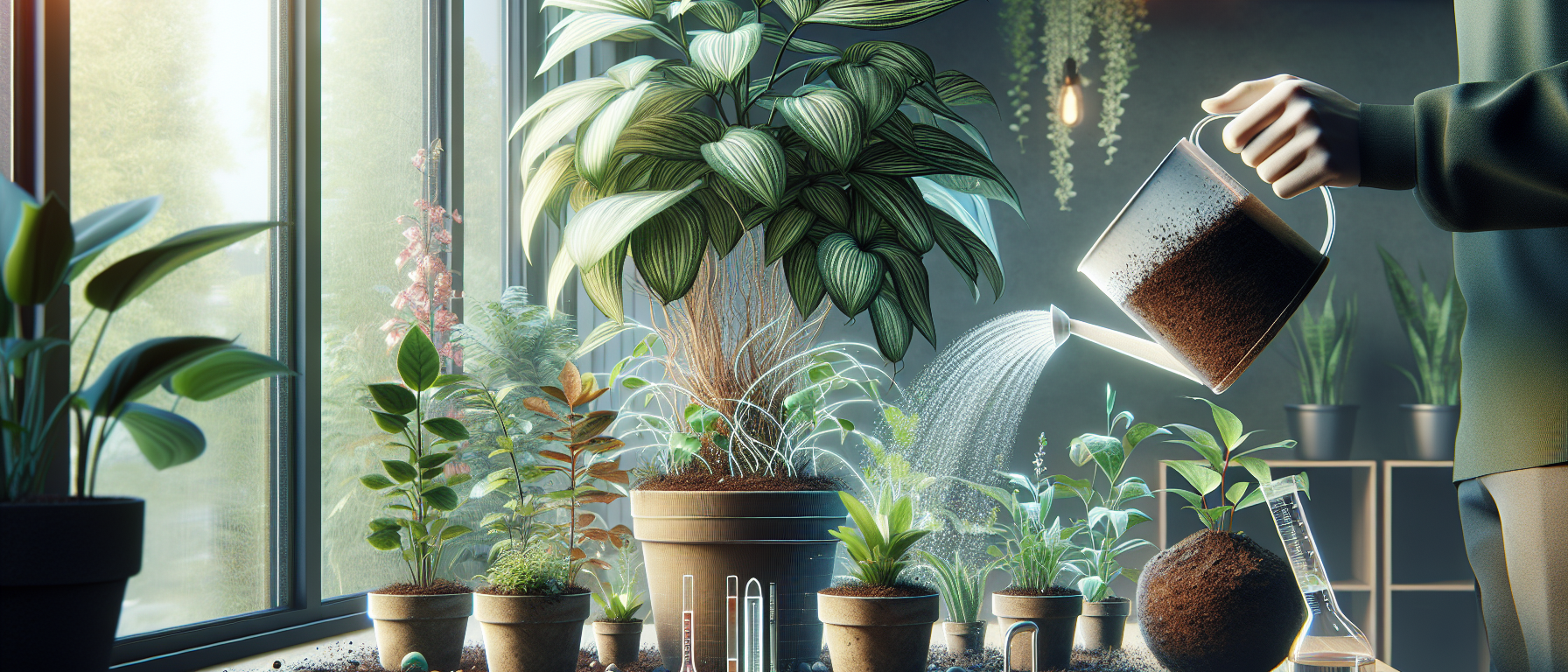
Customizing Feeding Regimens :
Customize your feeding regimen based on the individual needs of your indoor plants. Some plants may require more frequent or higher doses of fertilizer, while others may thrive with less frequent or lower doses. Pay attention to each plant’s growth rate, nutrient requirements, and response to feeding to tailor your feeding regimen accordingly.

Monitoring Nutrient Levels :
Consider periodically testing the nutrient levels in the soil of your indoor plants to ensure they are receiving adequate nourishment. Soil testing kits are available at garden centers or online and provide valuable insights into the nutrient levels, pH balance, and overall health of the soil. Adjust your feeding regimen based on the results of soil tests to maintain optimal soil fertility and plant health.
Supplementing with Organic Matter :
Incorporate organic matter into your indoor plant care routine to supplement the nutrients provided by fertilizers. Organic matter such as compost, worm castings, or compost tea adds beneficial microorganisms, improves soil structure, and enhances nutrient availability for plants. Apply organic matter to the soil surface or mix it into the soil periodically to enrich the soil and promote plant health.

Feeding Newly Repotted Plants :
Newly repotted plants may benefit from a gentle feeding to support their transition and promote root establishment. Use a diluted fertilizer solution to minimize the risk of overfertilizing and provide the plants with a gentle nutrient boost as they acclimate to their new surroundings. Gradually reintroduce regular feeding once the plants have become established in their new pots.
Consulting with Plant Experts :
If you’re unsure about the best feeding regimen for your indoor plants, seek advice from plant experts, horticulturists, or experienced gardeners. They can provide personalized recommendations based on the specific needs of your plants and help troubleshoot any feeding issues or concerns you may have. Learning from experienced growers can help you develop a more effective and tailored feeding regimen for your indoor plants.
By incorporating these advanced feeding techniques into your indoor plant care routine, you can optimize nutrient uptake, promote vigorous growth, and ensure the long-term health and vitality of your indoor plants.
 Home and Garden